When considering your caffeine options, you might wonder about Starbucks matcha. It contains about 70 mg of caffeine per serving, which is less than the 95 mg typically found in coffee. This unique blend of caffeine and L-theanine in matcha could provide a smoother energy boost. But what does this mean for your daily routine? Understanding how Starbucks prepares its matcha and its potential health benefits can offer deeper insights.
Understanding Matcha and Its Caffeine Content
When you think about matcha, it’s essential to recognize its unique caffeine profile compared to other caffeinated beverages.
Originating from Japan, matcha types vary in quality and flavor, influencing their caffeine content. Typically, matcha offers a balanced energy boost, combining caffeine with L-theanine, promoting alertness without jitters.
Understanding these factors can help you make informed choices about your matcha consumption and its effects.
How Starbucks Prepares Its Matcha Beverages
Starbucks meticulously prepares its matcha beverages to ensure a consistent and enjoyable experience for customers.
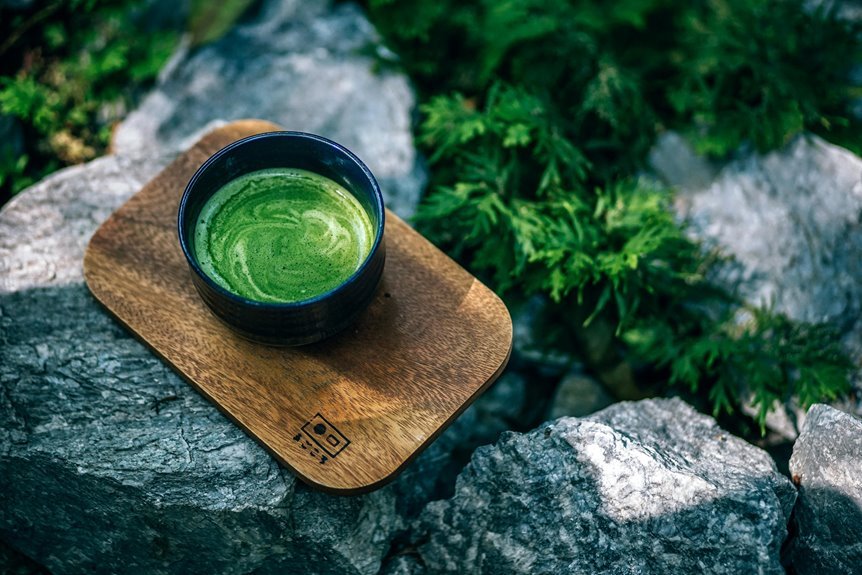
They use high-quality matcha powder, whisking it with hot water to achieve the perfect froth. This matcha preparation allows for seamless beverage customization, letting you adjust sweetness or add milk.
Comparing Caffeine Levels: Matcha vs. Coffee
While both matcha and coffee are popular choices for a caffeine boost, their caffeine levels differ significantly.
Typically, a cup of coffee contains about 95 mg of caffeine, while matcha offers around 70 mg per serving.
For those exploring coffee alternatives, matcha benefits include a steadier energy release, reducing jitters.
This makes matcha an appealing option for those seeking sustained focus without the caffeine crash.
Health Benefits of Matcha Beyond Caffeine
Matcha offers a range of health benefits that extend beyond its caffeine content.
Its antioxidant properties help combat oxidative stress, promoting overall wellness.
Additionally, many people experience enhanced mental clarity when consuming matcha, thanks to its unique combination of L-theanine and caffeine.
This synergy allows you to stay focused while maintaining a calm state, making matcha a truly empowering choice for your health.
Conclusion
In conclusion, Starbucks matcha offers a caffeine content of about 70 mg per serving, providing a gentler lift compared to coffee’s 95 mg. This unique blend of caffeine and L-theanine acts like a perfectly tuned orchestra, delivering a harmonious energy boost without the jittery aftermath. Beyond caffeine, matcha’s antioxidants contribute to overall health, making it a smart choice for those seeking clarity and wellness. So, when you crave a balanced pick-me-up, Starbucks matcha might just be your go-to.